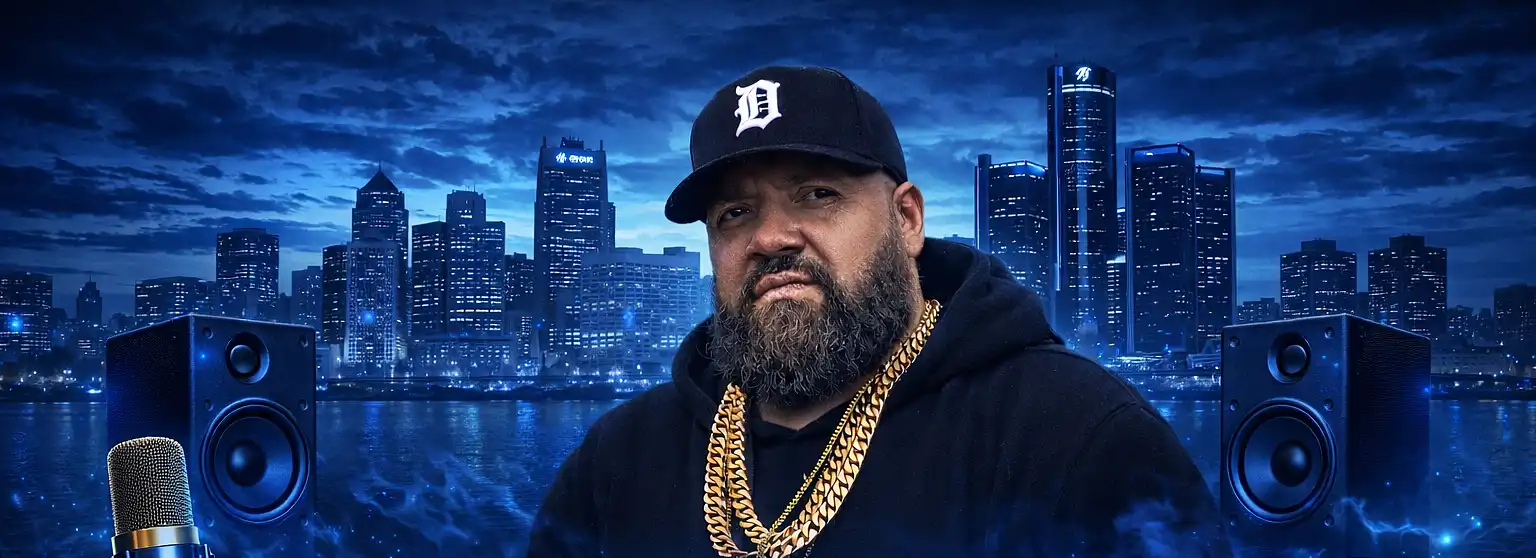
OG Big Ace
80
songs
0
plays
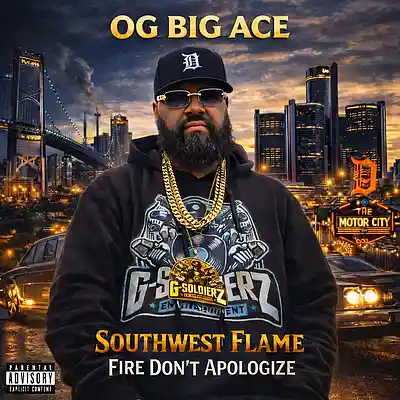
Fire Don't Apologize (Final Statement) Fire Don't Apologize (Final Statement)
Uploaded 3 hours ago
G-SOLDIERZ 2026 (EXECUTIVE CALL)_ G-SOLDIERZ 2026 (EXECUTIVE CALL)_
Uploaded 3 hours ago
Show all (80)
Albums
Band/artist history
OG Big Ace, better known as The Southwest Flame, has been in the game since 1998, coming up during a period when Southwest Detroit was ruled by gangs, sets, and street politics. Back then, if you weren’t affiliated, you were vulnerable, neighborhoods were divided, loyalty had consequences, and survival required maturity long before adulthood.

Ace wasn’t just adjacent to that world, he was directly involved, rising as a leader within the OGC (Original Gangster Crips). Through that position he learned structure, discipline, pressure, and how to carry responsibility in an environment where mistakes had real consequences.

Everything changed on October 20, 2005, when a dispute with rival gang members led to Ace being shot 13 times and stabbed 16 times. That incident didn’t just damage his body, it shaped his testimony, forcing him to re-evaluate purpose, alignment, and legacy. That experience became the root of the pain you hear in projects like The Blood, The Bullet, The Throne and The Funeral & The Flame, where survival, trauma, and evolution are not concepts, they’re lived reality.

His transition into music wasn’t a trend-chasing move, it was a way to document a life that most people only hear about in fragments, and to speak from experience instead of imagination. From 1998 to now, Ace evolved from neighborhood cipher rapper to respected figure, to a grown-man artist who represents history, survival, and evolution in the flesh.

He didn’t get here off hype or industry favors he got here by outliving an era, outgrowing the politics, and turning survival into testimony.
Have you performed in front of an audience?Absolutely. Ace has hit stages across Detroit and beyond from underground bars and community events to indie showcases and street-organized functions. Every crowd brings a different type of energy, but the ones in Southwest always hit different. They already know the vibe, they know the history, and they connect with the story in real time.
One standout moment was a Detroit show where half the room already knew the hooks before he touched the mic. No hype man, no theatrics just raw crowd participation. That type of moment reminds Ace why the voice matters because the people relate to the life behind it.
Your musical influences
OG Big Ace draws influence from real street rap artists who spoke for their blocks, documented their environment, and carried their city with pride and accountability. His influences span Southwest Detroit, the greater Michigan Midwest scene, and national Crip/gang-era voices who shaped an entire generation.

These are artists tied to the Southwest environment, mentality, or sound:

Big Gov (Southwest ambassador, political + street voice)
Tone Tone (East Warren but respected city-wide, collabs w/ Southwest artists)
DJ Los & Detroit Mixtape Circuit (helped push Southwest voices)

Southwest’s influence on Ace is less about one artist and more about the culture bilingual neighborhoods, hustler DNA, gang politics, and the blend of Detroit+Latino+street identity.

Blade Icewood
Street Lord Juan
Street Lordz / Eastside Chedda Boyz era
Payroll Giovanni
Doughboyz Cashout
Boldy James
The Purps (Westside production era)
Eastside Chedda Boyz
Sada Baby
Teairra Mari (earlier era R&B presence, Eastside representation)
Team Eastside
Rocky Badd
Skilla Baby

This side influenced the energy, delivery, and volume part of Detroit culture Ace respects.

Flint always had grit, rebellion, pain, and survival built into the music:

The Dayton Family
MC Breed
Top Authority

These names influenced Ace’s true-crime storytelling, pain music, and Midwest realism.

Outside Michigan, Ace was influenced by West Coast and Nationwide Crip lineage, where the music reflected sets, politics, structure, and storytelling instead of cartoon gimmicks:

Key influences include:
Ice Cube (LA gang-era documentary rap)
Snoop Dogg (Long Beach Crip lineage, smooth but sharp delivery)
C-Bo (Sacramento Crip, militant street storyteller)
Mac Dre (Bay Area turf culture, charisma, independent hustle)
Spice 1 (Cali street realism, no filter delivery)
E-40 (Bay Area boss talk, slang, enterprise mindset)
Nipsey Hussle (Crenshaw Crip, ownership blueprint, neighborhood investment)
DJ Quik (Compton sound palette + Blood/Crip LA era context)
WC (Westside Crip lineage, authoritative voice)
MC Eiht (Campanella Park storytelling)
Tray Deee (Insane Crip, sharpened penitentiary wisdom in bars)

This national influence gave Ace:
Discipline
Neighborhood loyalty
Grown-man perspective
Principles + structure
Storytelling over clout-chasing

SUMMARY OF INFLUENCE PROFILE

If you break Ace’s full influence map down, you get:

Detroit (Westside + Eastside + Southwest) for identity, hustle, slang, and realism
Flint + Pontiac for grit and militant Midwest storytelling
National Crip/Gang-era for discipline, structure, and documentary-style rap

Together, that formed a style built on:

Authenticity
Neighborhood loyalty
Midwest realism
Grown-man perspective
No gimmicks, no cartooning
What equipment do you use?
Ace works with a setup that balances old-school street practicality with modern recording quality. It’s built for clarity, bass translation, and authenticity rather than flashy studio aesthetics. His typical gear profile includes:

Vocal Chain:

Dynamic & condenser microphones chosen for full-bodied low end + gritty texture

Pop filters & isolation tools to capture raw Detroit vocal cadence cleanly

Monitoring & Playback:

Studio monitors designed for accurate bass response, not consumer hype

Headphones that emphasize detail, sibilance, and breath control

Beat Production & Tracking:

Drum machines & samplers rooted in Mob music / Cali / Detroit sonic textures

MIDI + DAW workflow for arrangement, editing, and sequencing

Recording / Mixing:

Digital Audio Workstations for tracking, comping, mixing, and mastering

Plugins and analog-style tools used to preserve warmth + street punch

Nothing in Ace’s studio is there for show if it’s there, it’s because it serves the sound, not the Instagram aesthetic.
Anything else?
What makes OG Big Ace unique is that his voice carries real lineage, not borrowed culture or hypothetical street fantasies. He’s one of the rare artists who can speak on:
Southwest Detroit in the gang era
Crip organization + OGC leadership dynamics
Detroit hustler culture
Neighborhood politics
Music as testimony, not cosplay
And he does it without turning trauma into cartoon entertainment.

Beyond the music, Ace represents evolution without identity loss. He didn’t abandon the elements that made him he refined them, redirected them, and made them part of a bigger mission.

He stands on:

Southwest Detroit
Crip lineage (OGC)
Michigan Hip-Hop history
Grown-man authenticity
G-Soldierz Entertainment

His brand isn’t built on chasing the algorithm it’s built on respect, consistency, maturity, and reality.

OG Big Ace aka The Southwest Flame is a Detroit-raised lyricist forged in the gang era of Southwest Detroit and shaped by leadership within the Original Gangster Crips (OGC). His sound blends Southwest culture, Westside mob music, Eastside raw energy, and Flint grit with the structure and storytelling lineage of national Crip/gang-era pioneers. Today, he represents a voice of lived experience, not imitation, bringing grown-man authenticity into the modern era of Midwest rap.Contact
Please sign up or log in to contact the artist.
Sign up
Log in
Promoted
Not related to artist
