
Perto do horizonte
German Bense – Bossa Nova Artist
Latin Jazz Track | Perto do horizonte by German Bense
Creative Commons license
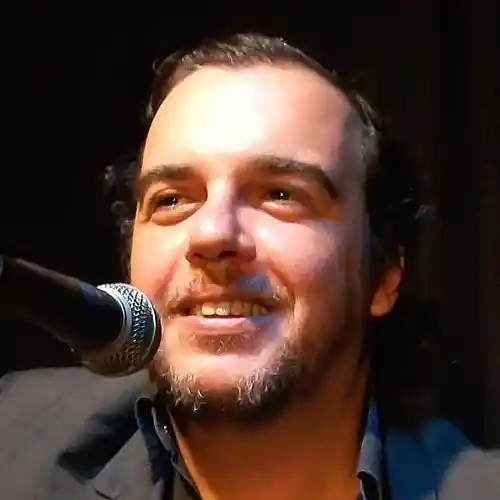
German Benses songs of Bossa Nova. Include a link for his song lyrics, chords and melodies, and piano sheet music for free.
German Bense is a Uruguayan singer, guitarist, bassist, composer and arranger, born in Montevideo in 1963. His artistic career has been closely associated with Brazilian music, particularly bossa nova, a genre that he has cultivated for more than four decades both as a performer and as a composer. His work combines the rhythmic and harmonic language of Brazilian music with a personal songwriting style developed from his background in jazz, popular music and the musical traditions of Uruguay.
Bense began studying piano and music theory in 1977 and started studying guitar and harmony in 1979, at the age of fifteen. Initially attracted to jazz because of its harmonic richness, he discovered bossa nova through his teacher Juan Lamas, an experienced bossa nova musician who became a decisive influence on his musical development. From an early age, Bense immersed himself in Montevideo's live-music scene, learning not only through formal study but also by observing and listening to professional musicians.
His professional career began in the early 1980s as a guitarist and bassist in Montevideo nightclubs. In 1984 he received the Revelation Award at the Festival de La Paz, an important event in Uruguayan popular music. From 1985 onward he performed as guitarist, bassist and singer at the legendary Montevideo bossa nova venue Clave de Fu. He also worked as bassist and arranger with the renowned Uruguayan percussionist Mario "Chichito" Cabral, connecting his Brazilian-music activities with the Afro-Uruguayan tradition of candombe. Between 1992 and 1995 he formed the bossa nova duo Bossa Nostra with singer Liese Lange.
During this first stage of his career, Bense spent approximately fourteen years performing continuously in Montevideo's nightlife. His repertoire included the great classics of bossa nova and Brazilian popular music, while he simultaneously developed his own compositions. He released Después de todo in 1989, in collaboration with composer Jorge Alastra, followed by Quimera in 1990. In 1995 he temporarily withdrew from professional musical activity.
His return in 2000 marked the beginning of a new and particularly creative period. The international response to his early Internet presence encouraged him to resume composing and recording. Opus Bossa Nova appeared in 2001, followed by Desafinados como Eu in 2002 and Love Song in Vain in 2005, released by Perro Andaluz Records. These projects established original composition as a central element of his artistic identity and expanded his audience beyond Uruguay.
Bense's approach to bossa nova is based on the conviction that the genre should remain a living and evolving musical language, rather than being limited to the reproduction of its historical repertoire. His music draws on the fundamental characteristics of bossa novasyncopated Brazilian rhythms, sophisticated harmony, melodic subtlety and intimate vocal deliverywhile incorporating contemporary subjects and his own lyrical and musical perspective. The influence of figures such as João Gilberto, Antonio Carlos Jobim and Vinicius de Moraes is evident, but his objective has consistently been to create new music within that tradition.
His international activity has included performances and tours in Argentina and Brazil. Particularly significant were his tours of Rio de Janeiro in 2009, 2011 and 2012, where he presented his own compositions in venues in Leblon, Ipanema, Botafogo and Copacabana. His performances have also included festivals and events dedicated to Brazilian music in Buenos Aires and Mar del Plata. His solo format, centered on voice and guitar, allows him to create an intimate, conversational relationship with the audience, inspired by the classic Brazilian café-concert tradition.
Another distinctive aspect of Bense's career has been his early use of the Internet as a means of musical dissemination. Beginning in the early 2000s, he used online recordings, videos and live Internet concerts to reach listeners around the world. This approach allowed him to develop an international audience while remaining based in Uruguay and reinforced his conception of music as a form of direct communication between artist and listener.
In recent years, Bense has broadened his exploration of Brazilian music beyond bossa nova and increasingly focused on samba. This development does not represent a break with his previous work, but rather a natural extension of his long engagement with Brazilian musical language. His experience with bossa nova, jazz harmony and Afro-Uruguayan rhythms provides a foundation for approaching samba from a personal perspective.
One important example is "Serenata pra ninguém" ("Serenata para nadie"), a composition conceived explicitly in the style of samba antigo, or old samba. The song was inspired by the famous serenade scene in Bruno Barreto's film Dona Flor e Seus Dois Maridos, based on the novel by Jorge Amado. Rather than simply reproducing the romantic atmosphere of the original scene, Bense uses the idea of the serenade to contrast the passionate and idealistic romanticism of the past with what he perceives as the accelerated, indifferent and increasingly dehumanized character of contemporary life.
Interestingly, the first arrangement of "Serenata pra ninguém" remained musically closer to bossa nova than to traditional samba. Bense has expressed his intention to make a new recording with an arrangement more faithful to the song's samba character and lyrical content. This illustrates an important feature of his current artistic process: he is not simply adding samba songs to his repertoire, but experimenting with different historical forms of samba and considering how their rhythmic, harmonic and expressive characteristics can shape his own compositions.
Another composition, "Entre la arena y el mar" ("Between the Sand and the Sea"), moves toward the territory of samba-canção. Described as a slow samba, almost approaching bolero, the song explores a dreamlike and sensual encounter with a mysterious woman emerging from the sea. The piece demonstrates Bense's interest in the broader spectrum of Brazilian song forms and in the expressive possibilities of samba beyond the faster, more rhythmically driven styles commonly associated with the genre.
His recent samba work can therefore be understood as a new chapter in an already long artistic journey through Brazilian music. After decades of establishing a personal identity within bossa nova, Bense is now expanding his compositional vocabulary by investigating samba, samba antigo and samba-canção, while retaining the harmonic sophistication and intimate songwriting approach that characterize his work.
This samba-oriented work is both a continuation and a broadening of his artistic identity. Rather than abandoning bossa nova, Bense approaches samba from the perspective of a musician formed by bossa nova, jazz and Uruguayan music. The result is an ongoing search for a personal synthesis between Brazilian rhythmic traditions and his own compositional voice.
German Bense's career can thus be seen as a sustained dialogue with Brazilian music from the perspective of a Uruguayan artist. From his early immersion in bossa nova in Montevideo, through decades of performance and original composition, to his international activity and his more recent exploration of samba, his work has been guided by the same fundamental principle: to keep Brazilian music alive through new compositions, personal interpretation and contemporary expression.
SoundClick artist German Bense presents "Perto do horizonte", an outstanding release in the Latin Jazz genre. It provides textures that deepen the overall emotional resonance. Every element feels intentional, resulting in a cohesive latin jazz track that resonates. "Perto do horizonte" has peaked at number 2 on the SoundClick Latin Jazz chart. Producers and creators can get a royalty-free Creative Commons license for "Perto do horizonte" — the standardized, legally-sound way to grant permissions.
Song Info
Track Files
Song Likes
On
9
Playlists