Philemon Mukarno - Composer
104 plays
6,115 views
6,115 views
Philemon Mukarno is a DutchIndonesian composer who treats sound as living architecture, shaping silence, noise, and ritual into intense, transformative listening experiences. Born in Jakarta and based in the Netherlands, he bridges Southeast Asian roots with the Western avantgarde, fusing gamelan resonances, experimental electronics, and contemporary composition into a language that is immediately recognizable as his own. On SoundClick, his music becomes a doorway into this universe: a place where composition is not just about notes, but about presence, risk, and spiritual depth. [philemonmukarno](https://philemonmukarno.com)

## Origins and musical roots
Philemon Mukarno was born in 1968 in Jakarta, Indonesia, growing up between layered traditions, urban density, and the subtle textures of Southeast Asian soundscapes. These early experiences seeded a sensitivity to rhythm, resonance, and ritual that still pulses beneath his most experimental works. Relocating to Europe, he entered the Dutch contemporary scene as an outsider with a double perspective: carrying the rhythmic complexity and timbral richness of Indonesia while absorbing the structural clarity and conceptual rigor of European modernism. [philemonmukarno.musicaneo](https://philemonmukarno.musicaneo.com)

## Education and craft
Mukarno studied Audio Engineering, Composition, and Electronic Music Composition at the Royal Conservatory, grounding his intuitive artistic drive in deep technical knowledge. This training gave him mastery over both acoustic ensembles and advanced electronic setups, allowing him to move fluently from intimate chamber textures to largescale electroacoustic architectures. Years of studio work and live recording sharpened his ear for detail, space, and fidelity, reinforcing his reputation as both a meticulous craftsman and an uncompromising sonic visionary. [filmindustry](https://filmindustry.nl/profielen/view/15928)

## Aesthetic vision and style
Critics and fellow composers often describe Mukarno’s style as utterly uncompromising: sharp, intense, and guided by a strong, individual aesthetic that refuses to dilute itself for comfort or fashion. His works are built on a strict control of Form and a powerful economy of Means, yet they radiate emotional volatility, hovering between chaos and order, brutality and fragile beauty. For Mukarno, music is not background; it is confrontation and revelation, a field where sound can expose what language hides and invite listeners into states of heightened awareness. [mukarno](https://mukarno.com/performance-art/)

## Fusion of ancient and future
A signature strand in his output is the fusion of ancient gamelan sonorities with cold, futuristic electronics, creating sound worlds that feel both ceremonial and alien. In works such as pieces for Slendro gamelan and live electronics, metal gongs and metallophones shimmer with historical memory while being radically displaced from their traditional roles, becoming elements in a new ritual of the present. This collision of timelinesancestral resonance and digital transformationgives his music a unique temporal tension, as if several centuries are sounding at once. [nl.wikipedia](https://nl.wikipedia.org/wiki/Philemon_Mukarno)

## Works, media, and collaborations
Mukarno’s catalogue spans electronic music, electroacoustic works, gamelan compositions, ensemble and symphonic pieces, as well as scores for dance, film, theatre, and multimedia installations. His compositions have been performed across the world, including the United States, Japan, Spain, Mexico, Indonesia, Bulgaria, Belgium, the Czech Republic, Germany, Croatia, and the Netherlands, often at festivals devoted to new and experimental music. Collaborations with dancers, visual artists, and performersparticularly within butohinfluenced and bodybased practiceshave turned many of his works into immersive environments where sound, movement, and light form a single ritual space. [worm](https://worm.org/2021/01/27/feature-philemon-mukarno-composing-spirituality/)

## Performance art and the sacred body
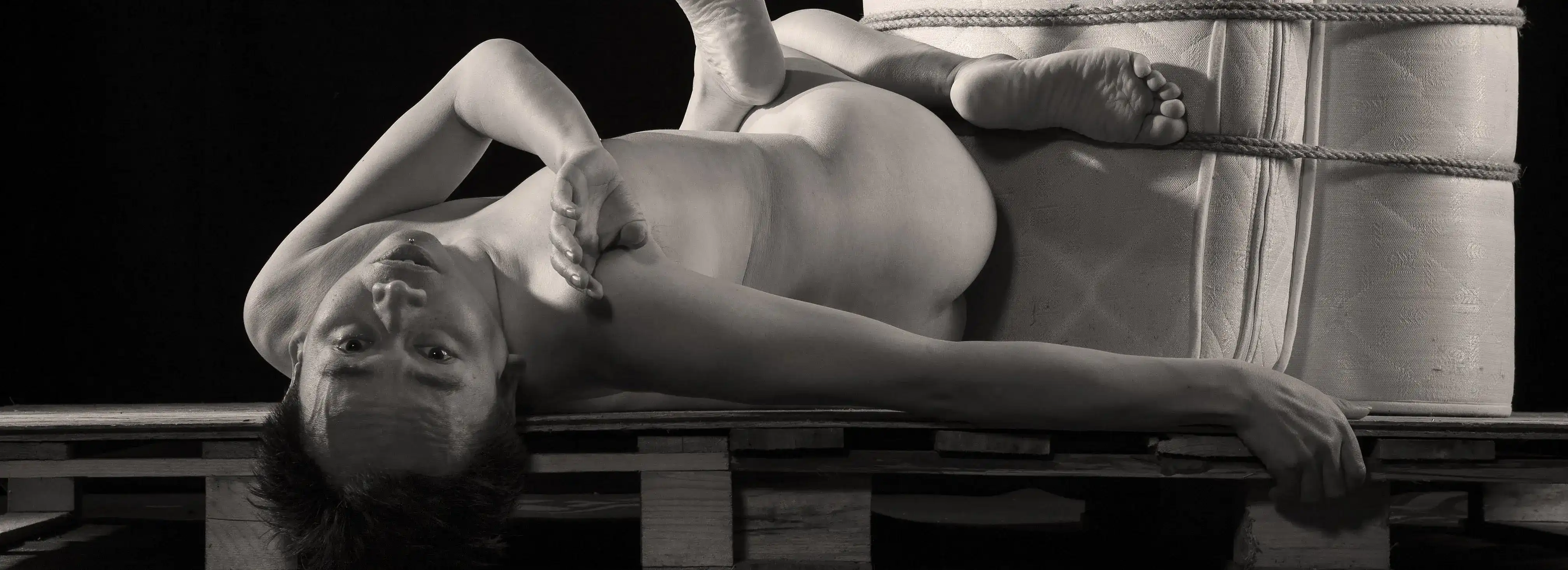
Parallel to his work as a composer, Mukarno has developed a radical performance practice in which the body is treated as sacred architecture and as a vulnerable, exposed instrument. Influenced by butoh and postwar Japanese dancetheatre, his performances often involve slow, intense movement, nudity, and stark visual images that explore themes of ego dissolution, mortality, and spiritual transformation. This embodied dimension feeds back into his music: the phrasing of a line, the pacing of silence, and the eruption of noise are all informed by a physical sense of breath, weight, and endurance. [mukarno](https://mukarno.com/butoh-a/)

## International recognition and impact
Over the years, Mukarno has become recognized as one of the most original voices in Dutch contemporary music, praised for a style that is both instantly recognizable and remarkably versatile. His works have been programmed by respected ensembles and performed on international stages, including broadcasts of his gamelan music to audiences across multiple countries. Composers and critics alike highlight his ability to maintain a monolithic aura of tension and focus, whether writing for traditional instruments, electronics, or unconventional setups. [newmusicnow](https://newmusicnow.nl/creator/philemon-mukarno)

## Philosophy of sound and form
At the heart of Mukarno’s practice lies a commitment to Meaning and Form: sound is never decorative, but always in service of a precise structural and emotional architecture. He approaches composition as a process of carving spaceadding and subtracting material until every gesture feels necessary, every silence charged, every texture alive with intention. This philosophy demands patience from both creator and listener, rewarding attention with glimpses of something raw, honest, and spiritually resonant beneath the surface of organized sound. [mukarno](https://mukarno.nl/matras/)

## Philemon Mukarno on SoundClick
On SoundClick, Philemon Mukarno opens a curated window into this multifaceted world: from dense electroacoustic storms to intimate, atmospheric works that hover on the edge of audibility. Each track is an invitation to step out of passive listening and into an active encounter, where headphones become a theatre and the room around you turns into a resonant field. For listeners who seek music that challenges, unsettles, and ultimately transforms, his presence on the platform offers not just songs, but experiencesmoments of shared vulnerability between artist, sound, and listener. [soundcloud](https://soundcloud.com/pmukarno)

## An invitation to listen
Engaging with Mukarno’s music means entering a space where genres dissolve and only intensity remains: the intensity of a gong fading into darkness, a breath inside distortion, a single tone stretched to the edge of perception. Whether encountered through speakers, headphones, or as part of a live, bodycentered performance, his work asks one simple question: how deeply are you willing to listen. On SoundClick, that question becomes a quiet but persistent callinviting you to move beyond background listening and meet sound as a living, transformative presence. [philemonmukarno](https://philemonmukarno.com)
Rooted in a deep connection to butoh, performance art, and experimental composition, Mukarno’s pieces reach beyond pure listening. Each track becomes a space of transformationinviting the audience to feel sound as presence, body, and spirit. Drawing from global influences and years of multidisciplinary collaboration, he builds sonic environments that challenge perception and awaken new ways of hearing.
Philemon Mukarno’s music on SoundClick is a journey through intensity, stillness, and transcendencean evolving dialogue between human vulnerability and electronic power. For listeners seeking sound that moves the soul and mind alike, his work stands as both experience and revelation.
Band/artist history
was born in Jakarta, Indonesia, and grew up surrounded by a mix of traditional music, city noise, and spiritual ritual, which shaped my ears long before I called myself a composer. Later I moved to the Netherlands to study Audio Engineering, Composition, and Electronic Music at the Royal Conservatory and Codarts, where I graduated with top honors and began forging my own uncompromising musical language. Over the years I have written electronic and electroacoustic works, gamelan pieces, ensemble and orchestral music, and scores for dance, film, theatre, and multimedia, with performances at international festivals across Europe, Asia, and the Americas. Today my work sits at the point where gamelan, electronics, and performance art collidefocused on intensity, spiritual depth, and a strict control of form.Have you performed in front of an audience?Yes, performing live is a vital part of my practiceboth as a composer and as a performance artist. My music has been presented at festivals and venues in countries such as Indonesia, Japan, the United States, Peru, Germany, Croatia, Belgium, and the Netherlands, often in programs for new and experimental music. Some of my most unforgettable moments have been performances where my compositions and my nude butohinfluenced body art merged: the body treated as sacred architecture, moving slowly under light, with sound, silence, and vulnerability forming one shared ritual space with the audience. Those nights confirmed for me that music is not just something to hear, but something to inhabit with the whole body.
Your musical influences
My influences begin with Indonesian gamelan and ritual musicthe shimmering gongs, microtonal metallophones, and cyclical time concepts that still resonate in my work today. At the same time, the Dutch and wider European contemporary music scenes have deeply shaped my sense of structure, form, and the courage to push sound to its limits. Outside of music, butoh and radical performance art are central influences; they taught me to treat the body as a sacred instrument and to accept darkness, vulnerability, and spiritual exploration as legitimate artistic materials. Noise, industrial sound, and electroacoustic practice complete this picture, giving me tools to sculpt air with electronics and transform raw sound into focused, expressive forms.What equipment do you use?
My tools change from project to project, but certain elements return often:

Electronics and studio gear  Professional audio workstations, virtual instruments, and signalprocessing tools that allow me to shape sound with great precision, reflecting my background in audio engineering and electronic music.


Acoustic instruments  From classical ensembles and piano to carillon and organ, as well as Slendro gamelan ensembles whose metallic resonance I often combine with live electronics.


Live electronics and sound design  Interfaces and processors for realtime transformation of acoustic sound in concert, blurring the line between instrument, body, and machine.


On stage and in the studio, the most important “equipment remains the listening body itselfthe place where all these technologies, traditions, and sounds finally become music.
Anything else?
http://soundcloud.com/pmukarno
104 plays
6,115 views
6,115 views
Admin
Philemon
@pmukarmo
