Song picture

No One Sees

Richard Shekari

No One Sees by Richard Shekari | Buy Beat

Comment Share
License   $0.00
Free download
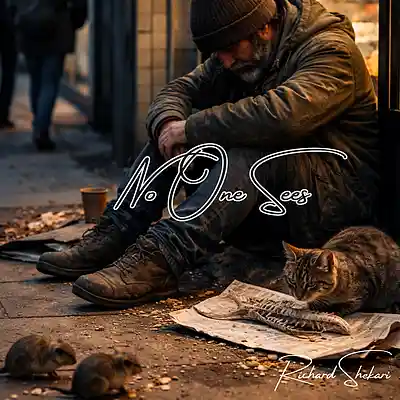
No One Sees is a quiet, compassionate song for those carrying hidden pain. It speaks to the loneliness of being misunderstood and overlooked, then gently turns the listener’s gaze to Christthe One who sees every tear, heals unseen wounds, and saves
richard shekari
Commercial uses of this track are allowed.
Adaptations of this track are NOT allowed to be shared.
You must attribute the work in the manner specified by the artist.
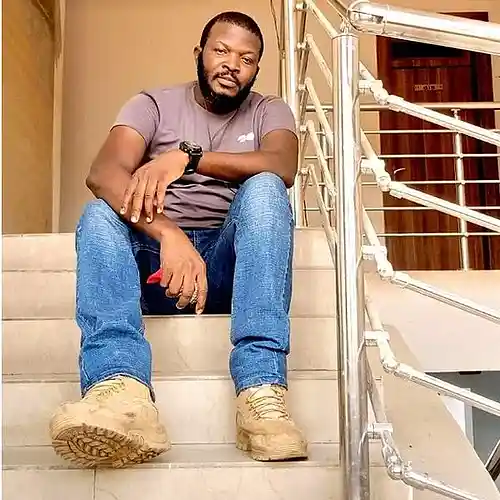
Artist picture
Born on April 11, 1981, in Bauchi State, Nigeria, Richard Shekari. I love adding a unique blend of rhythm, rhyme, and soul to my creations. Abuja, Nigeria.

I am Richard Shekari, a multifaceted artist and humanitarian based in Abuja, Nigeria. Born on 11 April 1981 in Bauchi, my relationship with music began early in life, long before I fully understood how deeply it would shape my identity. What started as a simple involvement in church would eventually become the foundation of my artistic journey, guiding me through seasons of devotion, rebellion, discovery, and ultimately reconciliation between two very different musical worlds.

My earliest musical training came in the early 1990s when I joined the church choir as a tenor. At that age, I did not see it as training or preparation for anything greater. I simply loved the atmosphere of music in the churchthe way voices blended together, the way melodies could lift the entire congregation, and the sense that music could carry prayers when words alone seemed insufficient. Singing in the choir taught me discipline, harmony, and attentiveness. I learned how voices could complement each other and how structure in music could bring order and beauty to sound. More importantly, those years instilled in me a deep awareness that music had a spiritual dimension. It was not just performance; it was communication between the human heart and the divine.

The choir also taught me humility. In a choir, the individual voice is never meant to dominate the whole. Each singer contributes to something larger than themselves. This understanding would stay with me for years, even during periods when my life seemed to move far away from those early lessons. The choir did more than teach me how to sing; it introduced me to music as service, as worship, and as a way of lifting others.

However, as I entered my teenage years in the late 1990s, I went through a period of rebellion that many young people experience when trying to find their place in the world. Questions about faith, authority, identity, and purpose began to stir within me. That rebellion gradually pushed me away from the church environment where my musical journey had begun. In that space of questioning and emotional intensity, I found myself drawn to rap music.

Rap provided something the choir had not given me at the time: a raw and direct outlet for personal expression. While the choir had taught me melody and harmony, rap introduced me to rhythm, wordplay, and storytelling. It was a world where emotions could be spoken boldly, where struggles and frustrations could be transformed into poetry over beats. I began experimenting with rhymes, writing lines, and crafting verses, often simply playing with language and sound. At first, it was just youthful exploration, but gradually I realised that writing itself was becoming a powerful tool for me.

Through rap, I developed the writing skills that would later define much of my creative work. The discipline of fitting words into rhythm sharpened my awareness of syllables, timing, and lyrical structure. I learned how to compress ideas into powerful lines, how to create imagery with language, and how to tell stories that could capture a listener’s attention. Rap was not just music for me; it became a training ground for my voice as a writer.

During that period, I released two underground rap albums. These projects were part of my attempt to fully explore that path and understand where it might lead. Though the albums circulated only within limited spaces, they represented an important stage of my artistic growth. They allowed me to experiment, to take risks, and to push the boundaries of my creativity. Yet, despite the excitement and freedom I felt in that world, my rap career was relatively short-lived. By around 2010, that chapter of my life had come to an end.

Looking back today, I understand that those years were not a detour but an essential part of my development. At the time, the two pathsthe church choir and rap musicseemed completely opposite. One was rooted in spiritual devotion and communal harmony, while the other thrived on individual expression and raw honesty. Yet those differences are precisely what shaped the artist I have become.

The choir gave me melody, reverence, and an understanding of music as a sacred act. Rap gave me lyrical courage, storytelling ability, and the technical tools to shape words into rhythm and meaning. Where the choir taught me how to lift voices toward heaven, rap taught me how to speak honestly from the depths of the human experience. One nurtured my spirit; the other sharpened my craft.

Today, my musical style is the meeting point of those two journeys. The choir boy in me still seeks to glorify God through melody and worship, while the writer formed during my rap years brings structure, poetic depth, and expressive freedom to every song I create. When I write and compose today, I often feel those two influences working together. The melodies carry the echoes of my early choir days, while the lyrics reflect the rhythmic precision and storytelling instincts I developed through rap.

As a songwriter within the gospel genre, I strive to create music that resonates deeply with listenersnot only spiritually but emotionally and intellectually as well. My songs are meant to be both prayer and reflection, combining heartfelt worship with thoughtful lyrics that invite people to examine their own journeys.

Beyond songwriting, I also take part in mixing and mastering my music. I enjoy shaping the sonic character of my songs until they reflect what I like to call my “perfect taste (lol). For me, this stage is just as creative as writing the song itself, because it allows me to sculpt the emotional atmosphere of the music and present it in the most authentic way possible.

My creative expression also extends into the literary world, where I have authored several engaging titles. Writing books allows me to explore ideas and stories in greater depth than music alone sometimes permits. Just as with my songs, my literary work seeks to offer reflection, insight, and storytelling that can connect with readers across different genres and backgrounds.

When I look at my journey as a whole, I no longer see two conflicting musical paths. Instead, I see two necessary seasons that shaped who I am today. The choir gave me the heart of worship, while rap gave me the voice of expression. Together, they formed the foundation of my artistic identity and continue to influence every piece of music and writing I create today.

SoundClick artist Richard Shekari presents "No One Sees", a remarkable release in the Alternative genre. It provides textures that deepen the overall emotional resonance. The optimistic atmosphere pairs with a solid bounce pulse throughout the track. "No One Sees" has peaked at #21 in the Alternative General category on SoundClick. Richard Shekari continues to build an Alternative catalog on SoundClick, one of the longest-running platforms for independent artists.

Song Info
Charts
Peak #87
Peak in subgenre #21
Author
Richard Shekari
Rights
Richard Shekari
Uploaded
December 29, 2025
Track Files
MP3
MP3 9.3 MB 320 kbps 4:03 minutes
Meta Data
Character
Energy
relaxed, cool
high-energy
Danceable
coffee-place
dancefloor
Positivity
dark, sad, angry
happy
Appeal
unique
radio-friendly
Story behind the song
This song was written as a conversation with the unseen and unheardthe friend who keeps going while no one notices the weight they bear. It reflects the belief that when human care runs out, God’s presence remains. The closing whisper, “I’m here, son, is the heart of the song: a quiet assurance that the Lord has been near all along.
Lyrics
No One Sees Verse 1: Hello, how are you holding up today, old friend? I hope you’ve counted every blessing, one by one, dear friend. I know, no one truly understands your story; But look a little closeryou’ll see the Lord is good. Pre-Chorus: No one sees the shadows pulling your hopes down. No one feels the pain you’ve carried all this time. No one sees the weight of the burden you endure. No one cares if you’re still breathing or gone. Chorus: Look up to Jesus, Author of our faith; He holds the whole wide world in His hands, and He will heal your wounds. Look up to Jesus, He will break these chains; The Lord alone is kind enough to save a weary soul. Verse 2: Hello, I know you’ve cried alone in the dark; You searched and searched, yet hope felt so far away. I know, you thought you wiped your own tears in the dark, alone; But He gave you the strength, and softly whispered, I’m here, son. *Pre-Chorus + Chorus* Copyright 2025 Richard Shekari Written, produced and performed by Richard Shekari.
Comments
Please sign up or log in to post a comment.