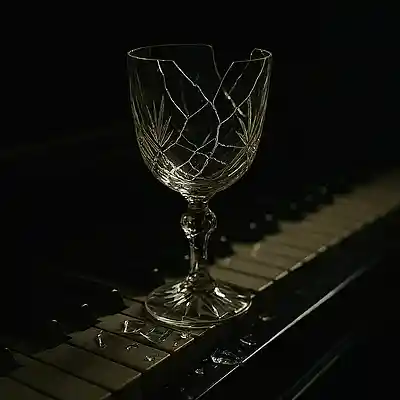
Glass Fracture is a deconstructed jazz waltz. It trades speed for suspense, using a 3/4 pulse and dissonant piano clusters to create a dark, cinematic atmosphere in the A minor key.
Check out the artist page.
Stream all 37 songs for free.
Story behind the song
The goal was to weaponize the waltz. Usually, 3/4 time feels elegant or whimsical, but here it feels like a loop you can’t escape. The technical challenge was in the restraint playing fewer notes but making sure every dissonant interval carries enough weight to keep the listener unsettled. It's about the space between the hammers hitting the strings.

Cultural & Musical Heritage:

This track sits firmly in the Dark Jazz and Post-Bop tradition. It references the "Chamber Jazz" style of the late 50s but strips away the romanticism. By using the 3/4 Waltz structure in a minor key with "outside" chromatic notes, it evokes the feeling of a haunted ballroom. It’s a nod to Bill Evans’ harmonic depth, but through a much colder, more modern lens.

BPM: 160 (Felt as 53 BPM in a slow 3-count)

The Movements:

0:00 - 0:54  The Unraveling: The piano introduces a melancholic, drifting waltz. The bass stays low and woody, providing a somber foundation for the dissonant melody.

0:54 - 1:36  Shadow Play: The solo section. The piano notes become more sparse and "outside," ringing out into the silence like glass hitting a concrete floor.

1:36 - 2:20  The Sway: The drummer moves to the cymbals, creating a shimmering, hazy texture that emphasizes the "Three-count" without ever becoming a standard dance.

2:20 - 2:48  The Fading Light: The melody returns but feels more fragmented, eventually dissolving into a single, unresolved bass note.

Lyrics and concept by Ward C Locke. Music produced using Suno AI.